
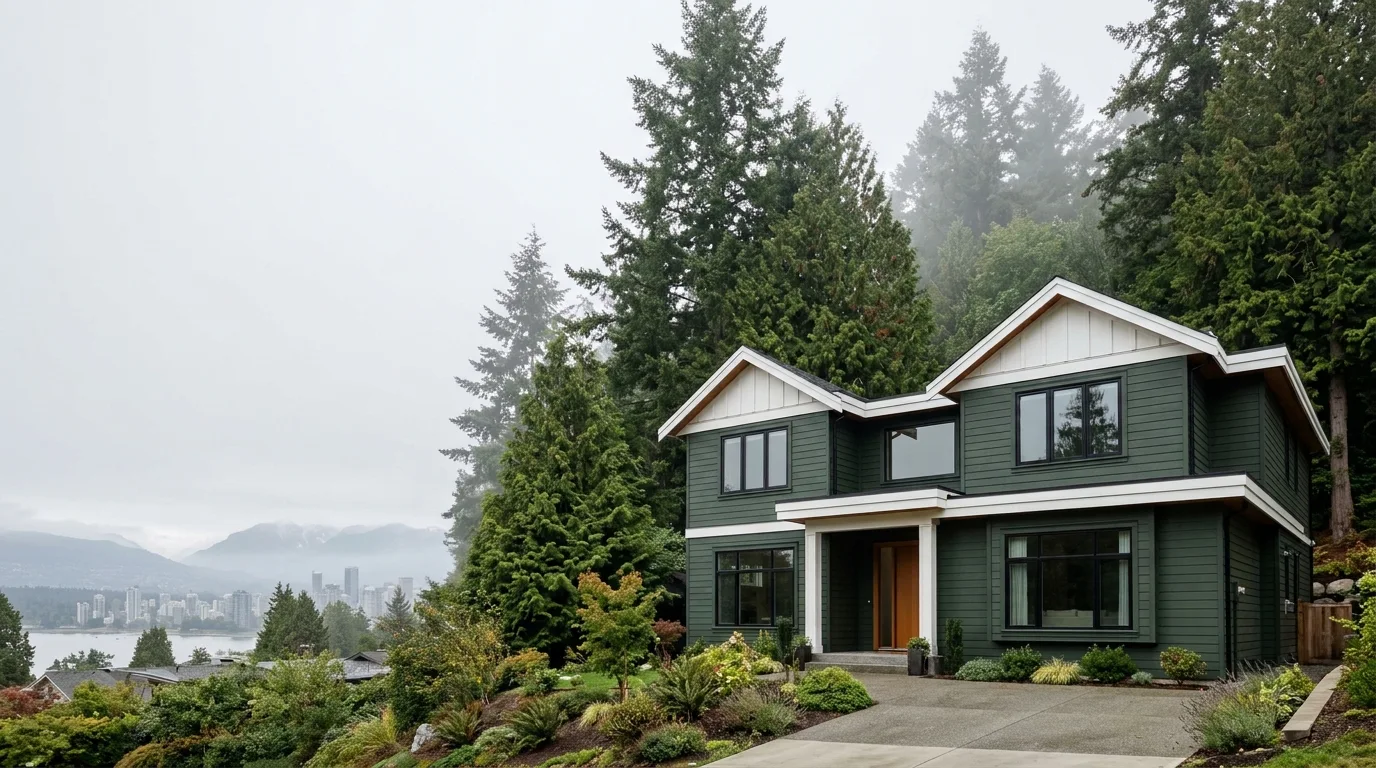
Made for a climate that never fully dries out.
James Hardie siding is fibre cement: cement, sand and cellulose fibres pressed into boards and panels. It doesn’t rot, it won’t feed a fire, woodpeckers and insects leave it alone, and it holds paint far longer than wood.
The board is only half the job, though. Fibre cement has to be installed with the right gaps, fasteners, flashing and clearances, or the warranty and the wall both suffer. That’s where our crew spends its time.
- Non-combustible boards
- Resists rot, moisture swelling and pests
- Factory-finished ColorPlus or primed for painting
- Works with EasyTrim reveals for a modern look
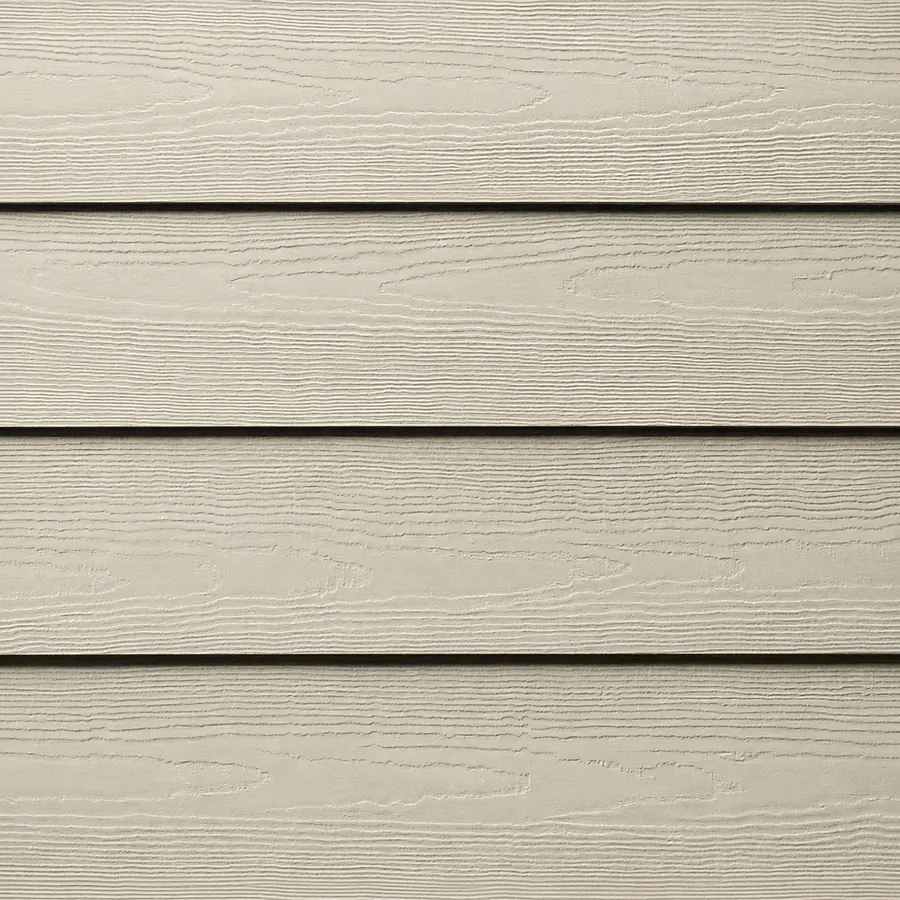
Hardie products we install
HardiePlank® lap siding
The everyday workhorse: horizontal boards in smooth or wood-grain textures, in a range of exposures to suit the scale of the house.
HardiePanel® vertical siding
Large vertical sheets, often with battens for a board-and-batten look on gables, farmhouse styles and modern walls.
HardieShingle®
A shingle texture that adds detail to gables, dormers and bump-outs without the upkeep of cedar shakes.
Hardie® Artisan®
A thicker lap board with deeper shadow lines and cleaner joints, for homes where the detail really matters.
HardieTrim® boards
Fibre cement trim for corners, windows, doors and fascia, so the trim lasts as long as the siding.
With reveals or LUX
Hardie pairs well with EasyTrim reveals for crisp lines, or LUX woodgrain accents.
How we install fibre cement
- Strip & inspectOld siding off, sheathing checked and repaired.
- Weather barrier & flashingHouse wrap, window and door flashing, kick-out flashing at roof edges.
- Rainscreen where neededStrapping to create a drainage gap on exposed or wet walls.
- Boards & trimInstalled with the gaps, fasteners and clearances above ground, roofs and decks that James Hardie’s instructions call for.
- FinishJoints, caulking and touch-up paint, then a full walkthrough.
What a Hardie job costs
Fibre cement costs more than vinyl to buy and install. It’s heavier, it’s cut with special tools, and the detailing takes longer. What your home costs depends on wall area, height, the profile, ColorPlus or primed boards, trim details and what we find under the old siding.
We measure and price every job in writing, with no obligation.
Get a Hardie quoteJames Hardie siding FAQ
Is fibre cement worth it over vinyl?
It usually costs more to buy and install than vinyl, but it’s far more impact-resistant, it won’t burn, and it holds its shape in heat. For a home you plan to keep, most owners find the extra cost pays for itself.
Should I choose ColorPlus or primed boards?
ColorPlus boards come factory-painted with a baked-on finish, so there’s no painting on site. Primed boards are painted after installation, which gives unlimited colour choice. We’ll walk you through both.
How long does a Hardie re-side take?
Most detached homes take one to three weeks depending on size, the number of windows and corners, and what we find under the old siding. Your written quote includes the expected timeline.
Can you match Hardie to an existing section?
Often, yes. We stock-match profiles and texture, then paint to match. On very old boards an exact match isn’t always possible, and we’ll tell you up front.
How do I look after Hardie siding?
Rinse it once a year with a garden hose and soft brush, keep sprinklers from hitting it constantly, and check the caulking at windows every few years. Primed and painted boards will eventually need repainting; ColorPlus finishes last longer between repaints.
Can Hardie go over my old siding?
We don’t recommend it. Removing the old siding lets us check and repair the sheathing and install a proper weather barrier and flashing, which is what keeps the wall dry.
Thinking about Hardie?
We’ll show you profiles and colours on site and price your home in writing.